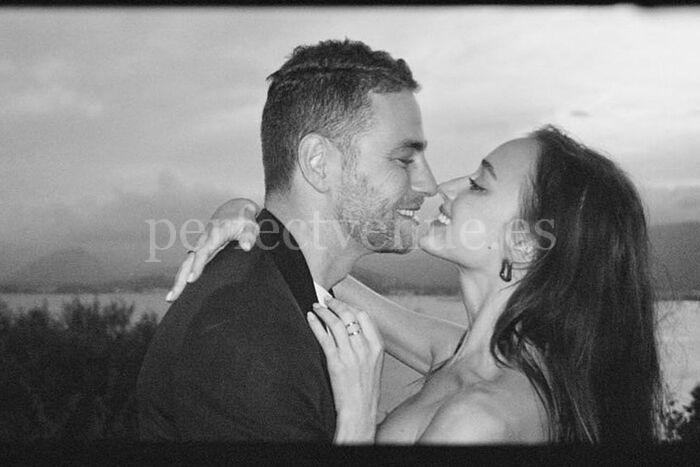
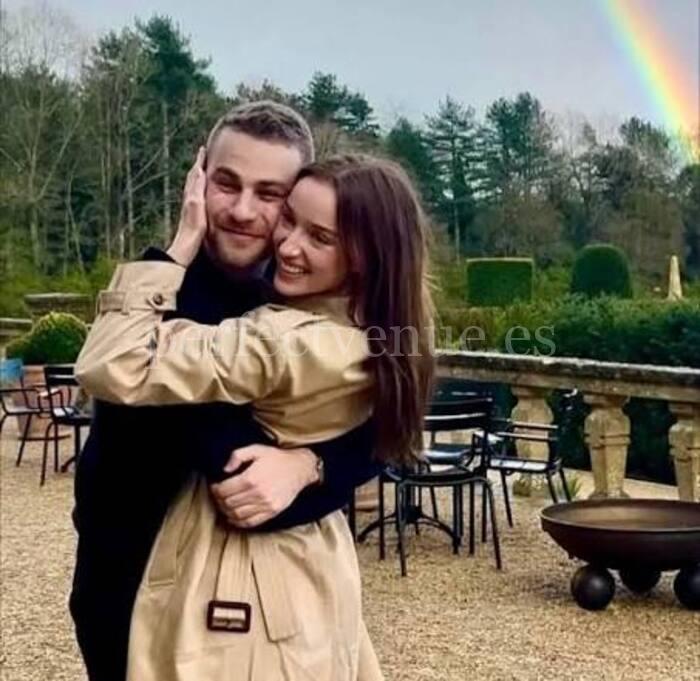
Phoebe Dynevor wedding, star of Bridgerton, and producer Cameron Fuller is reported to have taken place last Saturday, September 5, in Provence, France. According to reports published this week, the couple is believed to have chosen Le Mas des Poiriers, an impressive 18th-century estate surrounded by nature and located near Avignon.
Beyond the celebrity curiosity, there is something particularly interesting about this choice: Dynevor and Fuller reportedly did not opt for the typical five-star luxury hotel, but rather for a historic, private property surrounded by gardens where they could create a much more intimate and personalized celebration.
Le Mas des Poiriers covers approximately 65 acres and is located on an island in the Rhône River, just a few minutes from Avignon. The property, built in the 18th century and later restored, combines traditional Provençal architecture, gardens and an exceptional sense of privacy.
Are we seeing a new indication of where international luxury weddings are heading? Everything seems to suggest so.
Phoebe Dynevor wedding: a historic and completely private estate
According to reports published on September 7, Phoebe Dynevor and Cameron Fuller are believed to have said “I do” on Saturday the 5th at Le Mas des Poiriers.
The couple had reportedly visited the estate the previous year and had been particularly impressed by its privacy and visual beauty. The ceremony is believed to have brought together family and friends before continuing with a seated meal, drinks and dancing in the evening.
The property fits perfectly with the European wedding aesthetic that we are increasingly seeing among international couples: historic architecture, vegetation, seemingly natural gardens and different spaces capable of completely transforming throughout the day.
And this is probably one of the key reasons behind the choice.
An estate like this does not simply serve as a backdrop for the ceremony. It becomes the setting for an entire wedding weekend.
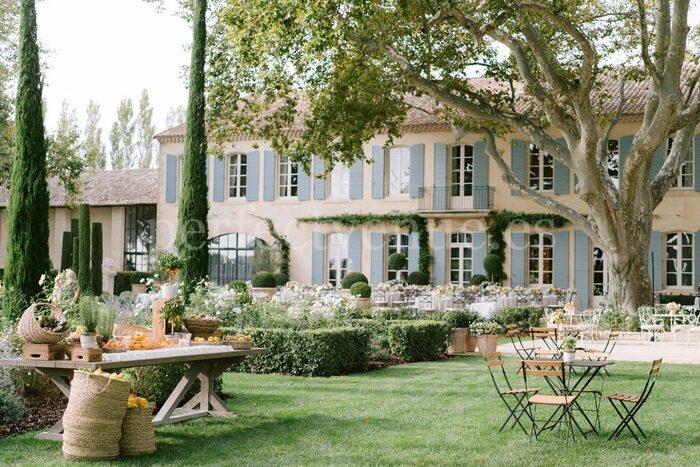
Le Mas des Poiriers: an 18th-century estate in the heart of Provence
Le Mas des Poiriers is located near Avignon and retains the character of a traditional 18th-century Provençal estate.
The property covers approximately 65 acres and is surrounded by gardens and nature, providing one of the most sought-after elements in luxury weddings today: genuine privacy.
Its exterior architecture, light-colored façades, soft-toned shutters and vegetation seamlessly integrated into the surroundings also create a setting that is immediately recognizable as Provence.
There is no need to build a huge set when the venue itself already has such a strong identity.
And it is precisely these types of properties that are gaining prominence in destination weddings: spaces where architecture, landscape and different environments allow couples to design a completely personalized celebration.
Why are celebrities choosing private estates over large hotels?
Luxury hotels remain spectacular settings for weddings, but there is a very clear trend toward other types of venues.
Couples are increasingly looking for:
- Privacy.
- Exclusivity.
- History.
- Large gardens.
- Different areas.
- Accommodation.
- Creative freedom.
- Multi-day experiences.
A private estate also makes it much easier to control who enters and leaves the property.
And for a celebrity, this detail may be even more important than any decorative element.
We are not simply talking about luxury in terms of marble, grand chandeliers or five-star service.
We are talking about luxury understood as privacy, space and time.
One estate, multiple wedding settings
Another reason why these properties work so well is their versatility.
A wedding can begin in a garden, continue around a terrace, move to an area prepared for dinner and finish with the party in a completely different setting.
For example:
- Welcome → Gardens
- Ceremony → Outdoor area
- Cocktail → Terrace
- Dinner → Large outdoor table
- Party → Separate space
Guests remain within the same venue, but feel as though they are discovering different settings throughout the celebration.
This avoids unnecessary travel and allows for a much more interesting visual narrative.
In Spain, we can find countless estates and historic properties that follow this same philosophy, with castles, terraces, pavilions, courtyards and extensive gardens that allow a celebration to be divided into completely different environments.
Historic estates bring something that cannot be manufactured: personality
We can rent furniture, install flowers or design spectacular lighting. But there is something much more difficult to reproduce: the history of the space.
Old walls, established gardens, traditional architecture and centuries-old buildings immediately add visual depth.
That is why historic estates work particularly well for photography and video. Every corner has texture, scale and personality.
Centuries-old farmhouses, palaces, Andalusian estates, Galician manor houses and historic villas can make the venue itself one of the most important aesthetic elements of the wedding.
The new luxury is not about filling the venue with decoration
Phoebe Dynevor’s choice also fits another trend we have been seeing for some time: less added decoration and more emphasis on the venue itself.
When an estate has centuries-old trees, historic façades, gardens or expansive views, the best creative approach is often to enhance these elements.
Decoration can be concentrated on:
- Ceremony.
- Flowers.
- Tables.
- Lighting.
- Stationery.
- Seating plan.
- Specific statement areas.
There is no need to intervene in every corner.
In fact, doing so could take away from the venue’s personality.
Gardens become the protagonists
Luxury international weddings are placing particular emphasis on gardens. Not only for ceremonies.
They can also be used for:
- Dinners.
- Cocktails.
- Brunches.
- Parties.
- Photography.
- Live music.
- Lounge areas.
Vegetation also makes it possible to create a much more organic aesthetic.
Floral design can interact directly with the surroundings, using arrangements that take into account the architecture, existing vegetation and lighting rather than trying to compete with them.
Weddings that last an entire weekend
Another major change in destination weddings is that the main celebration no longer has to be concentrated into just a few hours.
We are increasingly seeing multi-day formats:
Day 1: Welcome
Informal dinner, cocktail or gathering for guests.
Day 2: Wedding
Ceremony, cocktail, dinner and party.
Day 3: Farewell
Brunch, pool or relaxed lunch.
This format allows guests traveling from different countries to genuinely have time to spend together.
It also turns the wedding into a complete experience rather than simply a celebration.
A particularly strong trend in destination weddings
These types of venues make even more sense for international weddings.
When guests have traveled to another country, couples often want to offer something more than just a few hours of celebration.
The estate and the destination become part of the experience.
Provence offers gastronomy, historic villages, landscapes, wine and an aesthetic that is internationally recognizable.
Spain offers a very similar combination of possibilities.
From Catalan farmhouses to Andalusian estates, Galician manor houses, estates around Madrid and Mediterranean villas.
This variety makes it possible to create destination weddings where the location itself becomes part of what guests have traveled to discover.
Privacy: probably one of today’s greatest luxuries
When it comes to celebrities, privacy becomes even more important. An estate away from major urban areas allows couples to:
- Control access.
- Avoid onlookers.
- Manage suppliers more effectively.
- Protect guests.
- Host different activities without leaving the property.
Moreover, when the entire property can be booked exclusively, guests can feel for several days that the space belongs entirely to them.
This concept of exclusivity can be much more powerful than simply booking a large ballroom.
Estates with accommodation: everything happens in one place
Another particularly sought-after feature is the possibility of accommodating some guests within the estate itself or very close to the venue.
This makes it easier to manage:
- Preparations.
- Transfers.
- Pre-wedding dinner.
- Celebration.
- Brunch.
- Activities.
And, above all, it eliminates one of the major logistical challenges of destination weddings: constantly moving dozens or hundreds of people from one place to another.
When accommodation and celebration can be integrated within the same property, the wedding begins to feel much more like a private multi-day getaway.
Wedding planners specializing in destination weddings
The more complex the experience, the more important coordination becomes.
A multi-day wedding involves working simultaneously with:
- Venue.
- Accommodation.
- Transfers.
- Catering.
- Decoration.
- Photography.
- Music.
- Activities.
- International guests.
For this reason, destination weddings require particularly precise organization.
A specialized wedding planner can coordinate everything from finding the venue to managing suppliers, travel, accommodation and guest activities.
Especially when it comes to multi-day formats with a welcome event, main wedding and post-wedding brunch, having a team that centralizes the entire organization allows the experience to maintain the same vision from beginning to end.
Spain also has estates capable of offering this type of experience
There is no need to travel to Provence to find historic estates, large gardens and venues capable of hosting a multi-day celebration.
Spain has countless properties with these characteristics.
Estates covering hundreds of hectares, hotels located in historic buildings, farmhouses surrounded by vineyards, former palaces, Mediterranean villas and hidden properties surrounded by gardens allow this concept of international wedding to be brought to very different destinations.
Madrid, Catalonia, Andalusia, the Balearic Islands, Valencia, Galicia and Castilla y León offer completely different options, but with one feature in common: the venue stops being simply the place where the wedding takes place and becomes part of the experience.
The wedding of Phoebe Dynevor therefore brings renewed attention to a trend that seems increasingly clear: luxury weddings are no longer necessarily about celebrating inside the most impressive hotel.
Many couples are looking for precisely the opposite.
A hidden estate, historic architecture, gardens, privacy and enough space to create, for several days, a small world reserved exclusively for them and their guests.
And perhaps that is the real reason why these types of venues are winning over international weddings: for a few days, it does not feel like you are attending an event.